
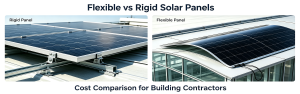
Why Low‑Load‑Capacity Villa Roofs Cannot Install Standard Rigid Solar Panels
Introduction
Many property owners in Europe want to add solar power to their villa homes. However, not all residential roofs are built to support heavy‑duty solar hardware.
A large number of old‑build villa roofs only offer low load‑bearing capacity. Installing traditional rigid glass‑based solar panels on these weak roofs will bring hidden safety risks.
Standard rigid solar modules consist of thick tempered glass, heavy aluminum frames and metal mounting racks. Every square meter adds considerable static weight to roof structures. For aging villa roofs with limited load capacity, this extra weight cannot be ignored.
Heavy weight of standard rigid solar panels
Traditional rigid solar panels weigh roughly 20‑25 kg per panel. When combined with aluminum mounting brackets, the overall load rises further.
Old villa roofs, especially tiled roofs built decades ago, are only engineered for basic weather loads such as snow and wind. They are not designed to hold dozens of heavy rigid modules.
Once the total weight exceeds the roof’s designed load limit, multiple risks appear:
Roof tile cracking and tile falling‑off
Roof beam deformation or long‑term structural fatigue
Hidden water leakage caused by bracket drilling penetration
Drilling installation brings extra risks for weak villa roofs
Standard rigid solar systems require extensive drilling into roof tiles and rafters for rack fixation.
For low‑load villa roofs:
Drilling creates many penetration points. Poor sealing easily triggers roof water leaks.
Drilling damages the original roof structural strength, further weakening already‑limited load‑bearing performance.
Homeowners often face expensive roof repair costs years later.
Local building code & insurance requirements in Europe
Most European countries have strict building‑code rules for residential roof‑mounted PV projects.
Before installing rigid solar arrays, installers must complete roof‑load calculation reports.
If your villa roof is certified as low‑load‑capacity, local regulations will reject standard rigid solar installation.
Besides, house insurance may refuse to cover property damage if heavy rigid panels are improperly fitted onto low‑load roofs.
What is the feasible solution for low‑load villa roofs?
Flexible solar panels provide a practical workaround for low‑bearing villa roofs.
Ultra‑light weight: Flexible solar panels remove heavy glass and aluminum frames. Unit weight drops greatly, putting much less pressure on roof structures.
No‑drill bonding mounting option: Many flexible modules can be fixed with high‑strength structural adhesive, minimizing roof drilling damage.
Suitable for curved, fragile‑tile, low‑load villa rooftops where rigid racks cannot be deployed.
Note: Even for flexible solar solutions, you still need to evaluate roof condition, wind‑load requirements and local building standards before installation.
Conclusion
Standard rigid solar panels are excellent for roofs with sufficient load‑bearing capacity. But for low‑load old‑style villa roofs, their heavy weight and drilling‑dependent installation create structural risks, code‑compliance obstacles and high maintenance costs.
Light‑weight flexible solar panels open up new possibilities for villa owners who cannot use traditional rigid PV systems.
